Gate Types and Materials for Middle Tennessee Homes
See how 615 Gates' five gate materials differ on look, upkeep, and cost, then use the breakdown to narrow your choice.
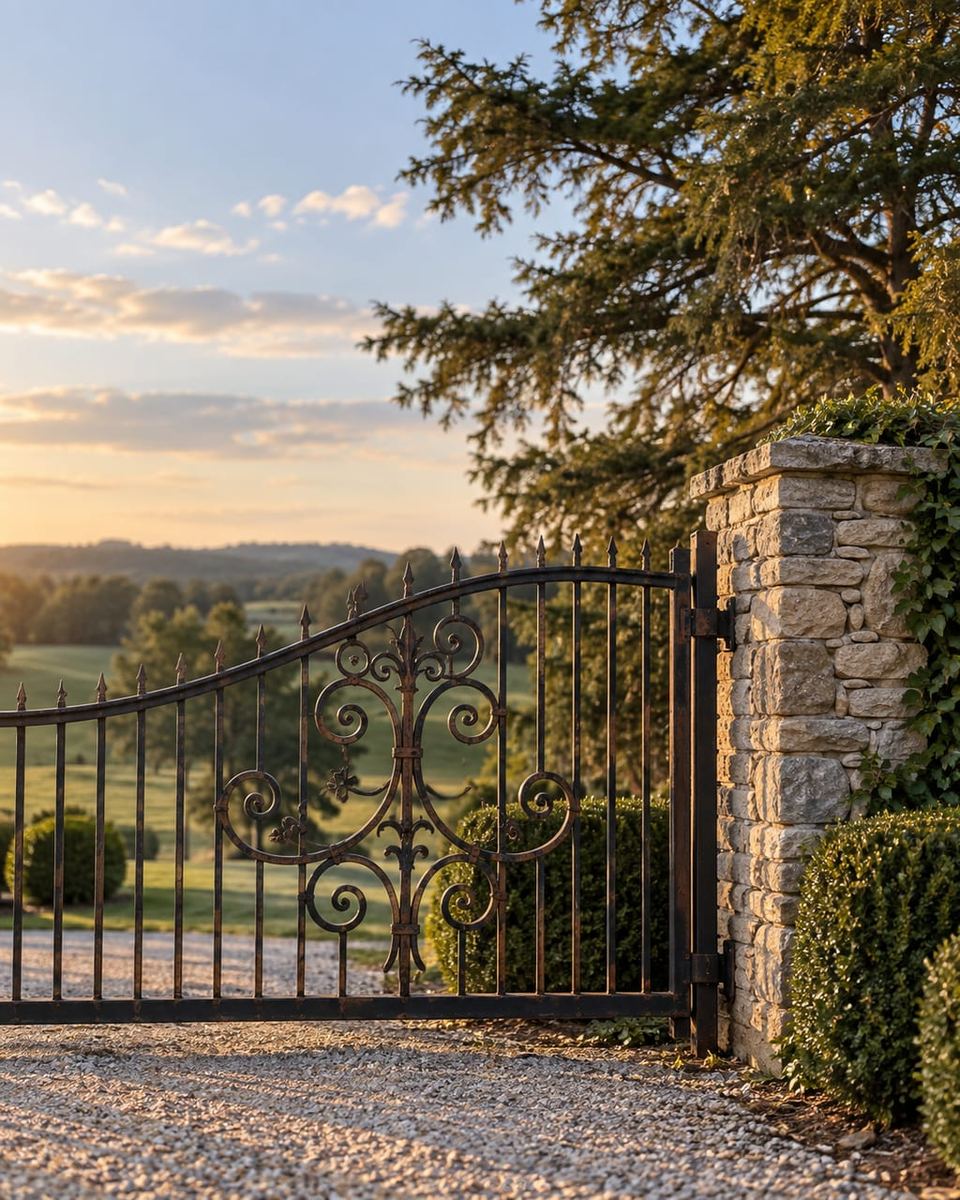
Nashville and Middle Tennessee properties call on 615 Gates for five gate materials: custom wrought iron, chain link, wood, vinyl, and aluminum, plus pool safety hardware built onto any of them. Iron asks for the biggest investment and gives back the strongest street presence. Aluminum and vinyl ask for almost none of iron's upkeep, and chain link closes an opening for the least money and the simplest build. Weigh those trade-offs against your budget, how much upkeep you want to take on, and Middle Tennessee's heat, humidity, and clay soils, then read through the comparison below to see where each material lands.
How the gate materials compare in Middle Tennessee
| Material | Look and feel | Upkeep | Middle Tennessee climate fit |
|---|---|---|---|
| Custom wrought iron | Forged scrollwork, the heaviest estate presence | Low, but a bare spot needs a rust check and touch-up paint | Powder-coated or freshly painted iron sheds Middle Tennessee humidity well. A scratched panel left bare is what invites surface rust to start. |
| Chain link | Utilitarian, see-through security | Low, tighten the hardware once it starts to rattle | Galvanized fabric handles hot, humid Middle Tennessee summers without special treatment. |
| Wood | Traditional board look, matches a wood fence line | Highest of the five, stain or seal on a set cycle | Sustained summer humidity works against an unsealed wood gate faster than a dry climate would. |
| Vinyl | Clean panel look, low upkeep alternative to wood | Very low, wipe it down and that is the extent of it | Sheds moisture rather than absorbing it, so it holds up through humid summers and wet winters without seasonal sealing. |
| Aluminum | Modern picket profile, lightweight | Very low, the powder coat resists rust on its own | A quality powder coat resists the rust that Middle Tennessee humidity and summer storms would otherwise invite on bare metal. |
| Pool safety hardware | Self-closing, self-latching add-on to any material above | Same as the base material, plus a hinge and latch check | Hot pool-season weather means more open-and-close cycles, so a mid-summer hinge and latch check keeps the hardware working correctly. |
These bands compare the materials to each other, not to a dollar figure. An actual price comes only after 615 Gates looks at the opening, the ground conditions, and what is already in place to match.
Questions, answered.
Which gate material holds up best against Nashville's summer heat and humidity?
Powder-coated aluminum and finished wrought iron shed Middle Tennessee's humid summers well, since neither one rots and a quality powder coat resists the rust that damp air invites on bare metal. Vinyl does not take on moisture the way wood does, so it also holds up with very little attention. Wood is the one that asks for the most seasonal care, since a fresh stain or sealant coat is what keeps humidity from working into the grain.
Is chain link strong enough for a driveway gate, or is it only for yard fencing?
Chain link works for a driveway gate as well as a yard fence gate, provided the frame is sized up for the wider opening and the hinges are built to carry an automatic opener's added cycling. Of 615 Gates' five materials, it is the least expensive way to close an opening, and its zinc coating shrugs off Middle Tennessee's hot, humid summers without extra treatment.
What actually makes a gate a pool safety gate?
Hardware makes a gate a pool safety gate, not the material underneath it. 615 Gates fits that hardware, self-closing and self-latching, onto whichever material a property already has or wants, wood, chain link, and aluminum most often. Gate operators sold and installed in the US are expected to meet UL 325, the national safety standard for gate operators, and the automated gate itself is expected to be built to ASTM F2200, the national construction standard for automated vehicular gates. The two standards work together: one covers the operator, the other covers the gate and fence structure around it.
How much upkeep do wood gates need in Tennessee's climate?
More than iron, vinyl, or aluminum. Middle Tennessee's sustained summer humidity works against an unsealed wood gate faster than a dry climate would, so staining or sealing on a regular schedule is what keeps moisture from swelling or checking the grain. A wood gate paired with a wood fence line still gives the most traditional, matched look for a property that already has wood fencing.
Can every gate material be automated with an opener?
Yes, every one of the five takes an opener. A swing or slide unit bolts onto wood, vinyl, iron, or aluminum with no changes to the gate itself. Chain link is the one exception: the frame and hinges need to be built up first so they can carry the extra weight and the daily cycling an opener adds. Whichever material you choose now, automation stays on the table later.
What is the real difference between an aluminum gate and a wrought iron gate?
Cost, weight, and finish. Custom wrought iron is fabricated piece by piece for one specific opening, carries scrollwork and panel detail, and weighs more, both in the driveway and in upkeep, since bare iron calls for a rust check and a fresh coat of paint now and then. Aluminum trades some of that heft and detail for a lighter, powder-coated finish that resists rust on its own and never needs repainting, which is why it is a common pick for a lower-upkeep property that still wants a metal gate.
Do clay soils in Middle Tennessee affect gate posts?
They can. Much of Middle Tennessee sits on limestone bedrock capped by clay-heavy soils, and clay is prone to swelling and shifting as moisture changes through the seasons. A gate post set directly in that native soil, rather than in a poured footing, can drift out of alignment after a wet winter, which is one reason a farm or rural gate with long fence runs sometimes needs a post reset that a driveway gate on a poured footing rarely does.
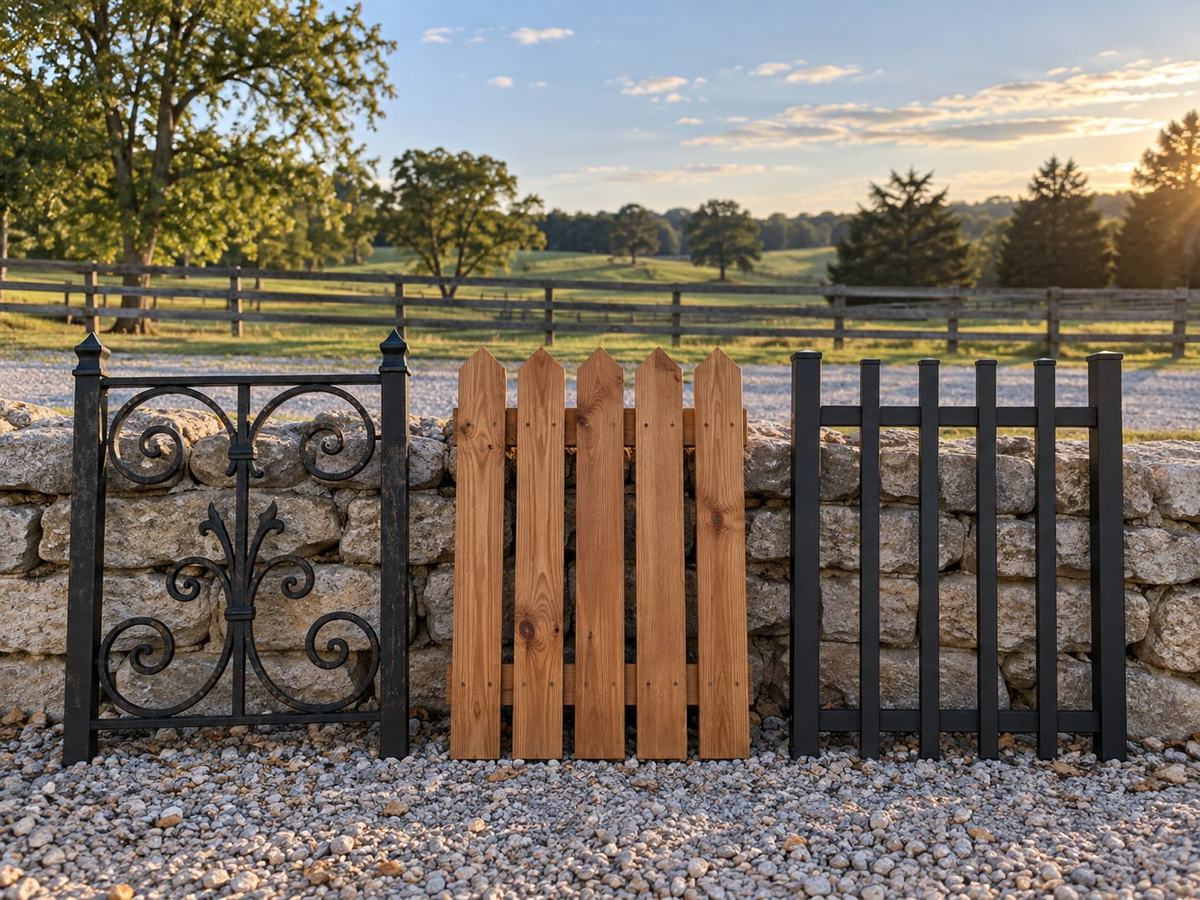
Custom wrought iron: forged for one opening
A custom wrought iron gate is what 615 Gates builds when an entrance needs to announce the property, not just open and close it. Fabrication starts from the actual opening rather than a stock size, so the scrollwork, panel weight, and finish all read as made for that specific driveway.
The gate is usually the first thing a visitor touches on the property. It should look built for that opening, not bought for it.
In Middle Tennessee’s humid summers, a powder-coated or freshly painted iron finish sheds moisture well. A scratched panel left bare is what invites surface rust to start, so an occasional touch-up keeps the finish ahead of the weather instead of behind it. Iron gates anchor entries at communities like Brentwood’s Governors Club, where stone guardhouses and iron gates mark the golf-community entrance, and the stone gate columns at Franklin’s Westhaven and Fieldstone Farms carry the same estate-presence idea in native stone.
Chain link: affordable, straightforward, and built for the climate
Chain link is what 615 Gates turns to when a property needs a working, secure gate without the cost or complexity of a custom fabrication. It handles a driveway opening as well as a yard fence line, and its galvanized coating stands up to Middle Tennessee’s humid summers without any special treatment.
A chain link gate takes a swing or slide opener as well, once the frame and hinges are beefed up to handle the extra weight and daily cycling. That makes it a common choice for a rental property, a storage yard, or any opening where cost and simplicity matter more than curb appeal.
Wood and vinyl: a lighter look that still dresses up an entry
Wood and vinyl trade iron’s weight for a lighter, more residential look at a driveway or a yard gate, and both tie into whatever fence line is already in place. Wood takes a stain or paint color chosen to match the house’s trim down to the shade. Vinyl gives up that flexibility in return for a panel that never asks for a repaint.
Middle Tennessee’s sustained summer humidity works against an unsealed wood gate faster than it would in a drier climate, so keeping up with the stain or sealant schedule is what keeps the grain from swelling or checking. Vinyl sidesteps that maintenance question, since it does not take on moisture the way wood does.
Aluminum: light weight, low upkeep
Aluminum is what 615 Gates points to when a property wants a modern picket profile and none of the upkeep iron or wood ask for. The powder coat resists the rust that Middle Tennessee’s humidity and summer storms would otherwise invite on bare metal, and that finish holds up without a repaint down the road.
It pairs with an existing wood or vinyl fence as easily as it pairs with itself, so a property upgrading from an older gate rarely has to change the fence to match.
Pool safety gates: it is the hardware, not the material
Pool safety comes down to hardware, not a specific material. 615 Gates fits self-closing, self-latching hardware onto whichever material a property already has or wants, wood, aluminum, and chain link most often, so the gate closes and secures itself every time, with nobody having to remember to do it by hand.
What most municipal pool barrier rules actually check is that self-closing, self-latching behavior, not the material underneath it, so confirming your city or county’s requirement is as important as picking a finish.
Matching a material to what the gate needs to do
Weigh the job the gate has to do before weighing how it looks in a photo. An estate entry that needs to project security calls for iron. A yard gate on a tight budget calls for chain link. A gate that gets opened and closed all day with the least fuss does best in aluminum or vinyl. A pool gate is a hardware decision once the self-closing and self-latching pieces are settled, not a material decision at all.
Automation works the same way regardless of material, so let look and upkeep make the call first and treat the opener as its own decision. If two materials are still tied, walking the actual opening, checking the ground, and looking at what fence is already there settles it, not another round of comparing photos.