Gate Access Control and Intercom Systems
Answer the gate from a phone, a wall panel, or a code at the post, whichever the property actually needs.
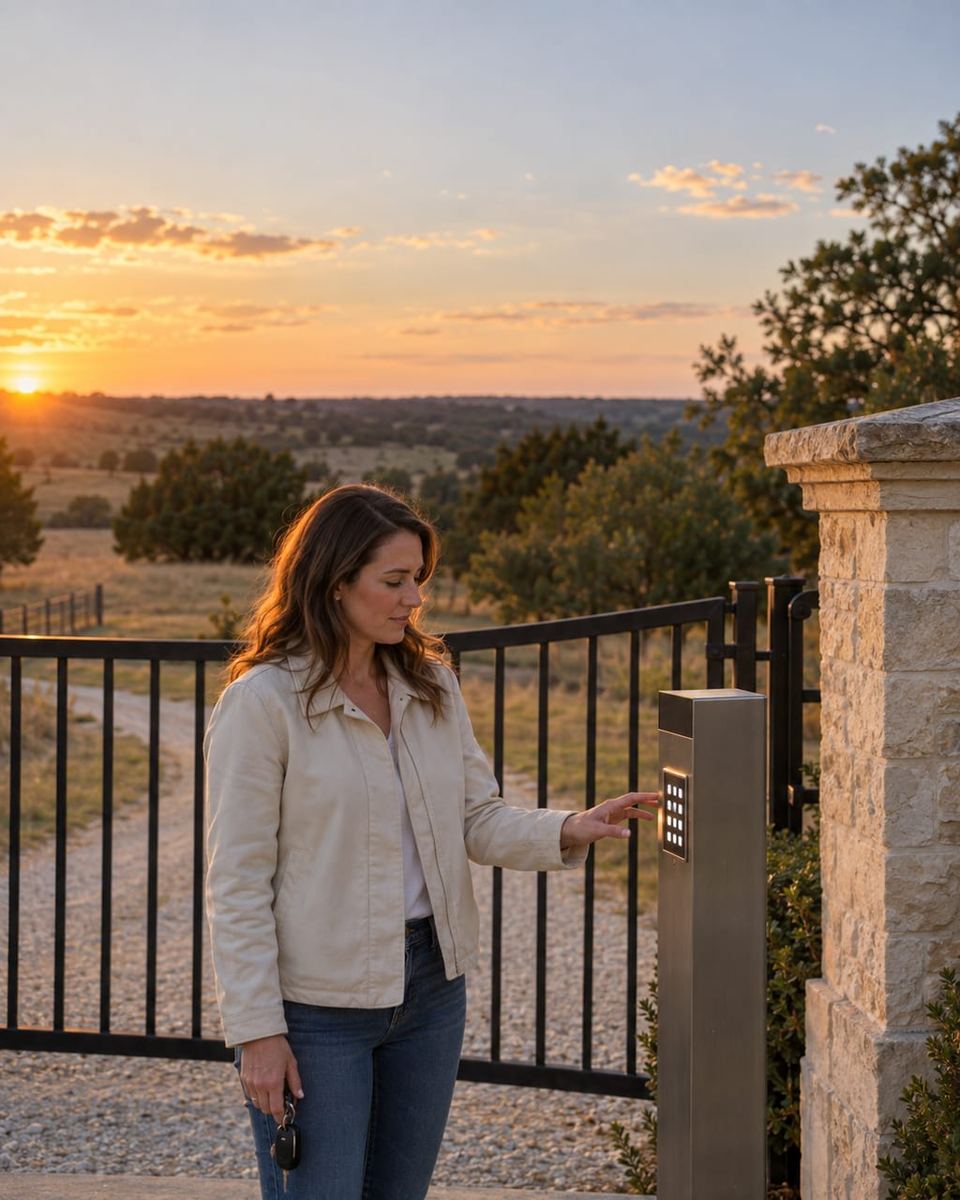
615 Gates installs keypad, telephone entry, cellular, and video intercom access control on driveway and commercial gates across Nashville and Middle Tennessee. A single-family driveway, an HOA entrance, and a commercial gate each call for a different system, and every install is scoped to how that gate actually gets used.
Sound familiar?
Access control methods at a glance
| Method | How it's controlled | Best fit |
|---|---|---|
| Keypad | Numeric code entered at the gate post | Single-family driveways, small properties |
| Telephone entry | Visitor dials a unit, resident opens by phone | Gated communities, multi-tenant entrances |
| Cellular entry | Cellular-connected panel, no landline or internet run | Rural gates, farm entrances, logistics-corridor commercial sites |
| Video intercom | Camera and two-way audio, answered by app or panel | Homes, HOAs, and commercial sites wanting to see the visitor first |
Scoped to the property on-site. This is a starting comparison, not a quote.
How a service call goes.
Questions, answered.
What's the difference between telephone entry and video intercom?
Telephone entry lets a visitor dial a resident from a call box and get let in by phone, with no camera involved. Video intercom adds a camera and two-way audio, so the resident sees the visitor before deciding whether to open the gate. Many properties run both together.
Can access control be added to a gate that already has an opener?
In most cases, yes. Keypads, telephone entry, cellular panels, and video intercom typically wire into the release circuit of the gate operator already installed, so the operator doesn't need to be replaced to add access control. A technician confirms that wiring on-site first, since gate operators sold and installed in the US are expected to meet UL 325, the national safety standard covering how that release circuit and its safety devices operate.
Do you install cellular gate entry where there's no landline or internet at the gate?
Yes. Cellular gate entry connects the access panel over a cellular signal instead of a landline or a wired internet connection, the usual choice for gates set back from the house, farm entrances, or any gate where running cable isn't practical.
Can one access control system cover more than one gate on the same property?
Yes. Properties with more than one entrance, a main gate and a service gate, or a front and rear entrance, can run both from one system rather than managing separate hardware and separate codes at each gate. This comes up often on HOA-governed properties in Williamson County, including gated communities in Brentwood and Franklin, where a main vehicle gate and a separate pedestrian or service gate share the same directory and credential list.
Do you install gate access control for HOAs and apartment communities, or only single-family driveways?
All three. A single-family driveway, an HOA-governed entrance, and a multi-tenant property like an apartment community or storage facility each need gate access control, and 615 Gates scopes the hardware and call routing to whichever one is actually being installed. Telephone entry, a call box tied to a resident directory, is the standard setup for gated communities and multi-unit entrances across Middle Tennessee, while a single-family driveway usually only needs a keypad.
What happens if a shared keypad code gets given out too widely?
With a single shared code, the only fix is changing it for everyone. Per-user codes and card credentials avoid that: one credential can be turned off without touching anyone else's, which is worth the extra setup on any property with more than one household or tenant using the gate.
Keypad access: still the simplest way to control who gets in
A keypad puts one numeric code at the gate post, so a resident, tenant, or delivery driver keys in a number instead of needing a remote, a card, or someone walking down to open the gate by hand. It stays the lowest-cost, lowest-maintenance access method, and 615 Gates wires it straight into the gate’s existing opener rather than installing a new one.
A single code works fine for a household that isn’t worried about who has it. It gets harder to manage once a property has turnover: a nanny, a landscaping crew, a short-term renter. Change the code and everyone with the old one is locked out at once, which is why per-user codes earn their setup cost on any property with more than one household using the gate.
Telephone entry: the standard for gated communities and shared entrances
Telephone entry lets a visitor dial a resident directly from a call box at the gate, and the resident opens the gate from any phone without walking outside. It’s the standard setup for gated communities and multi-unit entrances across Middle Tennessee, where several households share one entrance and a single keypad code isn’t practical.
Williamson County’s HOA-governed neighborhoods, including gated communities in Brentwood and Franklin, are exactly the kind of property that calls for it: a call box at the entrance, a directory tied to each household’s phone number, and a gate that opens once the call connects. Commercial sites use the same logic for staff and delivery access, without handing every visitor a card or a shared code.
Cellular gate entry: access control without a landline or internet drop
Cellular gate entry runs the access panel over a cellular connection instead of a landline or a hardwired internet drop, which matters for gates set back from the house or the property line where running cable isn’t practical. From the visitor’s side it works the same way telephone entry does, dial in, get let through, without depending on wiring that may never reach the gate.
Rural gates set well back from the house, and commercial gates along corridors like I-24 through Smyrna and La Vergne or the I-40/I-840 corridor near Lebanon and Mount Juliet, are common candidates: cellular entry skips the trench work a hardwired system would need.
Video intercom: see who’s at the gate before you open it
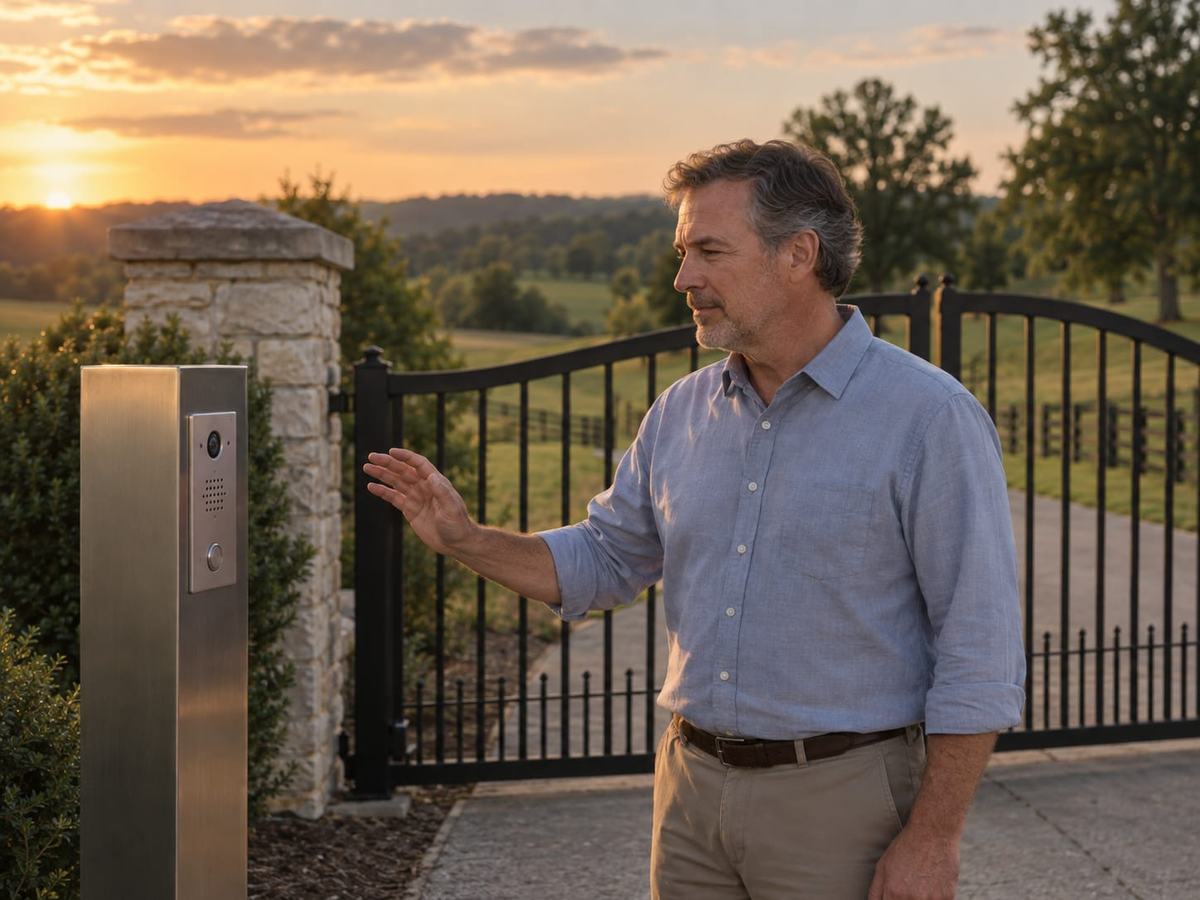
Video intercom adds a camera and two-way audio to the gate entrance, letting a resident or property manager see and talk to a visitor before deciding whether to open the gate, answered from a phone app, a wall-mounted panel, or both. It turns an old audio-only buzzer into something closer to a doorbell camera, mounted at the gate instead of the front door.
Video intercom pairs naturally with the other three methods above. A property might run a keypad for residents and add a video intercom just for the visitor and delivery lane, both wired into the same gate. Homes, HOAs, and commercial sites all use the same underlying hardware. What changes is how many units or households the system needs to route a call to.
A shared code can’t tell you who used it. A camera call can.
Gate openers and smart retrofits covers the phone-app side of controlling the gate motor itself, if remote control of the gate matters as much as seeing who’s calling. Commercial gates covers the barrier arms and perimeter access that pair with video intercom on warehouse and lot entrances.